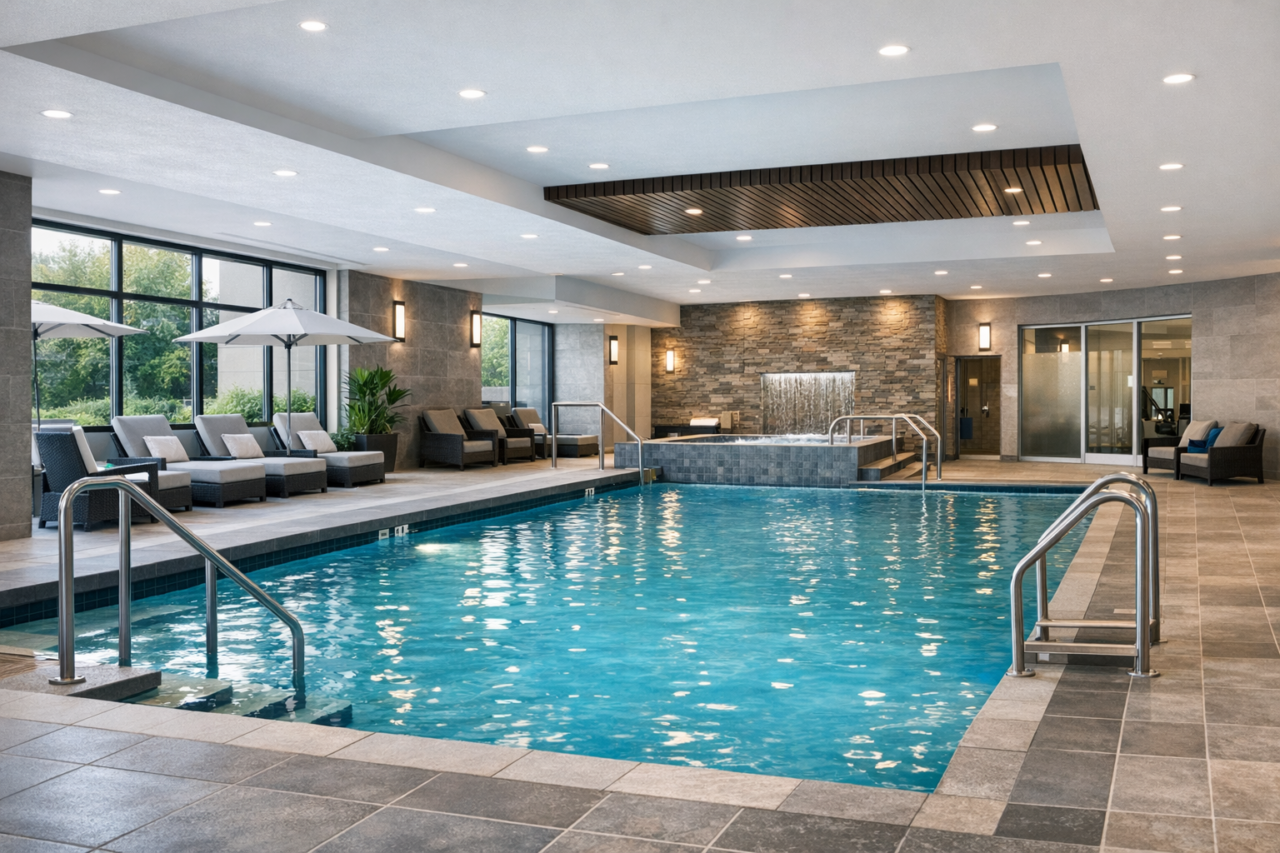
Why these pool upgrades matter
Guests notice pool condition fast. Worn finishes, dated lighting, and awkward entry points can make the whole property feel older than it is. Upgrades improve appearance, but they also reduce shutdowns, complaints, and avoidable safety issues.
This modernization angle matters most when it supports the larger job of hotel pool maintenance and upgrades in Eastern Ontario. A smart renovation plan should not only refresh the pool for guests, it should also solve recurring maintenance problems that affect operations, inspections, and long-term repair costs.
Pool resurfacing and interior finish improvements
Resurfacing changes both the look and the service life of a hotel pool. Stained plaster, rough patches, and fading finishes can make water look cloudy even when chemistry is correct. That creates a perception problem for guests and extra pressure on staff.
The main tradeoff is timing and material choice. A lower-cost finish may reduce upfront expense, but it can show wear sooner under heavy hotel use. If the substrate issues are ignored before the new finish goes on, the surface can fail early and force another closure.
Tile, coping, and decking upgrades
Tile, coping, and deck surfaces affect appearance, drainage, and slip resistance. Cracked waterline tile or loose coping often starts as a cosmetic issue, but it can quickly become a safety and maintenance problem. Decking that holds water also increases guest complaints and cleanup time.
Good upgrade planning keeps these components working together. The mistake is treating deck replacement as a separate finish project without checking slope, expansion joints, and edge transitions. Around the midpoint of a broader plan for hotel pool maintenance, these details often decide whether the renovation actually reduces future service calls.
- Replace damaged tile before water gets behind the finish.
- Check coping stability where guests enter and exit most often.
- Choose decking textures that balance grip with easy cleaning.
Lighting retrofits for better guest experience
Lighting upgrades can change how the pool feels without changing the pool shell. Brighter, more even light improves visibility in the water and on the deck. It also helps older indoor pool rooms feel cleaner and more current.
The common mistake is focusing only on fixture brightness. Poor placement can create glare on the water, dark corners near the deck, or uneven light at stairs and entries. In Eastern Ontario hotels, a retrofit should improve the guest experience while still making inspection and nighttime supervision easier.
Water feature additions and aesthetic enhancements
Water features can give a dated pool area a stronger identity. Small cascades, wall features, or visual accents can make the space feel more intentional and less like an afterthought. The wrong addition, though, can raise maintenance demands and interfere with circulation patterns.
Before adding features, operators should check how the new elements affect cleaning access, splash-out, and bather flow. Design ideas also need to fit operational standards reflected in an Ontario pool checklist, especially if the upgrade changes how people move through the pool area or how staff monitor it.
Ladder, rail, and entry system replacements
Entry hardware is one of the easiest ways to modernize a hotel pool and improve usability. Loose ladders, worn rails, and awkward step systems create immediate risk for guests. They also signal deferred maintenance, even if the rest of the pool looks acceptable.
The key issue is fit, not just replacement. New rails and entry systems must match deck conditions, anchor points, and user needs. If these details are missed, the upgrade can create wobble, drainage issues, or difficult access that leads to more complaints instead of fewer.
For many hotel properties in Eastern Ontario, the best upgrade plan starts by fixing the items guests touch and see most often, then sequencing larger finish and design improvements around those priorities.